The month of Ramadan is the month in which the Quran was sent down,
a guidance for the people, and clear verses of guidance and criterion.
[Quran: Chapter 2:183]

Sponsored

Friday, August 27, 2010

Ramadan Singapore Photos

Ramadan in Singapore 2010

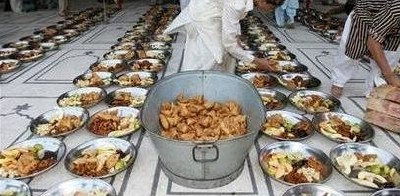
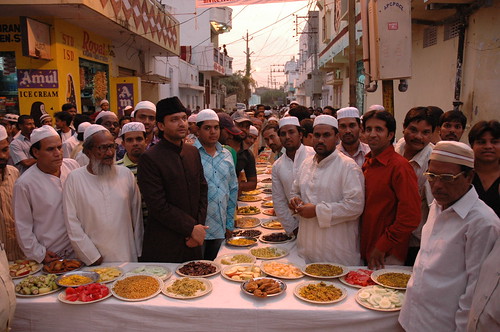
Every Ramadan in Singapore, a food bazaar is held at Arab Street selling tasty food for the breaking of the fast (puasa). Muslim and non-Muslim Singaporeans alike go to this food bazaar. Some delicacies sold at the food bazaar are only available during Ramadan, for instance, the Kathirah drink. So if you happen to be in Singapore during this beautiful month, go ahead and drop by Arab Street and visit the bazaar to soak in the atmosphere.

Here are some sights of the Ramadan food bazaar in Singapore, contributed by a Singaporean reader.

Ramadan Singapore Pictures 2010

Sultan Mosque in Arab Street, Singapore
Oldest Mosque in Singapore, First built in 1824.
Present Mosque Structure was Built in 1925.

Dates Galore.
Every Muslim break their fast with dates, even in Singapore!


Multitude Benefits of Dates :)

Chicken Shawarma

Ramly Burger
Meat Patties from Malaysia
Used to Make Burgers in Singapore
Very Popular!

Roti John (Roti is Malay for Bread)
The origin of the 'John' in the name is supposedly due to the
Western origin of the Baguette and the tomato sauce used in the dish.
The ingredients include minced meat (chicken or mutton), onion, egg,
tomato-chilli sauce and a baguette-type loaf.

Malay Desserts

Labels: , ,

Special Ramadan Series

Dear Reader, Assalaamu’alaikum.

Ramadan Mubarak. We wish you a blessed and productive Ramadan! Make no mistake about it - keeping the fast and increasing our acts of worship during this blessed month is not an easy task. The physical demands of balancing work or school with fasting all day, feeling fatigued and less effective than you normally are, waking up for Suhoor, praying Teraweeh and Tahajjud prayers, dealing with sleep deficits.

But the last thing we would want is to let Ramadan pass us by without doing all that we aim and desire to. Do not allow yourself to feel guilty or regretful when Ramadan passes.

The Ramadan Series will send you emails with practical tips on how to gain and maintain the physical and spiritual energy necessary to embark on increased religious oligations so that you will reap the benefits from this blessed month. This includes special Ramadan duas to say during the month. Do sign-up today!

* Email
First Name
Last Name
* = Required Field

Article Link

Share

Friday, August 20, 2010

Iftar Menu Ideas

If you are looking for iftar menu ideas for Ramadan 2010, here are an interesting Islamic multi-cultural food samples for you. It can indeed be difficult cooking up interesting and nutritious iftar dishes for a family who have been fasting all day. We hope you are amply inspired by the iftar menu ideas below!

Easy and Tasty Iftar Recipe Ideas

Appetizer

Moroccan Seafood (Shrimp) Briouat

or

Egyptian Baked Sambusak

Soup

Iranian Ramadan Soup
(Aash-e Sholeh-Ghalamkar)


or

Haleem

Main Dish

Moroccan Chicken Couscous

or

Lebanese Lamb Yoghurt Stew

Salad

Easy Cucumber Mint Salad

Dessert

Ramadan Dessert from Iran
Zolbia Bamieh


Labels: , , ,

Special Ramadan Series

Dear Reader, Assalaamu’alaikum.

Ramadan Mubarak. We wish you a blessed and productive Ramadan! Make no mistake about it - keeping the fast and increasing our acts of worship during this blessed month is not an easy task. The physical demands of balancing work or school with fasting all day, feeling fatigued and less effective than you normally are, waking up for Suhoor, praying Teraweeh and Tahajjud prayers, dealing with sleep deficits.

But the last thing we would want is to let Ramadan pass us by without doing all that we aim and desire to. Do not allow yourself to feel guilty or regretful when Ramadan passes.

The Ramadan Series will send you emails with practical tips on how to gain and maintain the physical and spiritual energy necessary to embark on increased religious oligations so that you will reap the benefits from this blessed month. This includes special Ramadan duas to say during the month. Do sign-up today!

* Email
First Name
Last Name
* = Required Field

Article Link

Share

Wednesday, August 11, 2010

Easy Iftar Recipe Ideas

Dear Readers,

How was or is the first day of Ramadan for you? InshaAllah, it will be as good as it was for us over at The Ramadan Blog.


If you are in need of easy, interesting tasty and iftar recipe ideas, please visit this recommended website:

Islamic Iftar

The Iftar recipe ideas at that website are compiled by a few of our enterprising sisters who also work on The Ramadan Blog.

To get you started, you can browse the few iftar recipe selections below that were compiled at Ramadan Blog before Islamic Iftar was created.

Please keep in mind that Islamic Iftar will contain updated iftar recipes, and also a selection of Eid recipe ideas. We will no longer post iftar recipes at the Ramadan Blog. So please bookmark the Islamic Iftar.

Thanks!


Easy and Tasty Iftar Recipe Ideas
Compilation Made in 2008 and 2009


Singapore Rice Porridge

Moroccan Hearty Soup - Harira

Indian Hearty Soup - Haleem

Middle Eastern Chickpea Soup

Kuwaiti Chicken Mechbous

Saudi Arabian Al Kabsa

Syrian Chicken Fatteh

Moroccan Chabakia

Moroccan Almond and Avocado Milkshake

Malaysian Steamed Almond Cake

Date and Cardamom Moist Cake

Labels: , ,

Special Ramadan Series

Dear Reader, Assalaamu’alaikum.

Ramadan Mubarak. We wish you a blessed and productive Ramadan! Make no mistake about it - keeping the fast and increasing our acts of worship during this blessed month is not an easy task. The physical demands of balancing work or school with fasting all day, feeling fatigued and less effective than you normally are, waking up for Suhoor, praying Teraweeh and Tahajjud prayers, dealing with sleep deficits.

But the last thing we would want is to let Ramadan pass us by without doing all that we aim and desire to. Do not allow yourself to feel guilty or regretful when Ramadan passes.

The Ramadan Series will send you emails with practical tips on how to gain and maintain the physical and spiritual energy necessary to embark on increased religious oligations so that you will reap the benefits from this blessed month. This includes special Ramadan duas to say during the month. Do sign-up today!

* Email
First Name
Last Name
* = Required Field

Article Link

Share

Thursday, September 3, 2009

Iftar Recipes | Quick and Easy Iftar Ideas

A lot of Muslim women today work a full-time job. In addition to their work responsibilities, many Muslim women also want to take on the kitchen responsibilities of cooking delicious and healthy meals for iftar. It is not an easy task! Sometimes you arrive home just two hours before iftar. So here are some quick and easy iftar recipes that you can use to whip up healthy and delicious iftar meals.

Iftar Recipes
Quick and Easy Iftar Recipes


Chicken Fajitas


Fajitas are a really good idea and they are not heavy on the stomach.

Slice boneless chicken breasts into thin strips and then marinate them in lemon juice, soy sauce, finely chopped onions, finely chopped jalapenos and a sprinkle or two of chili sauce depending on how spicy you want it. This can be done in the morning when you get up for sahoor or the night before. Then for iftar, stir fry the chicken until its done, and serve with warmed up tortillas, salsa, sour cream, guacamole, and shredded cheese.

Shrimp Fajitas


Saute the shrimps in a bit of oil, salt and pepper, and oregano. Saute a couple of yellow zucchini, couple of tomatoes, bell peppers individually. You can sit these in one bowl since you'll be piling these on the tortilla anyways. Sprinkle them with some salt. Warm up the tortillas in the microwave, spoon (1-2 tsp of taco sauce) and fill it with shrimp, veggies, cheese, roll it up and lightly fry in the pan so it is golden brown on all sides.

Quick Pan-Fried Tandoori Chicken


Just marinate some chicken in yogurt, lemon juice, mashed garlic, tandoori spices etc. Then add to a hot non-stick pan with about an inch of oil in it. Pour in about a cup or 2 of water and stir. Cover and cook on high for about 7 mins, then turn chicken over and cook for 5 mins more (covered). Then take lid off and stir fry uncovered until the liquid has evaporated. It's really tasty and quick. Serve with plain boiled white rice or pitta bread / wraps, hummus/ raita / salad / fresh tomato chutney / salsa.

Labels: , , ,

Special Ramadan Series

Dear Reader, Assalaamu’alaikum.

Ramadan Mubarak. We wish you a blessed and productive Ramadan! Make no mistake about it - keeping the fast and increasing our acts of worship during this blessed month is not an easy task. The physical demands of balancing work or school with fasting all day, feeling fatigued and less effective than you normally are, waking up for Suhoor, praying Teraweeh and Tahajjud prayers, dealing with sleep deficits.

But the last thing we would want is to let Ramadan pass us by without doing all that we aim and desire to. Do not allow yourself to feel guilty or regretful when Ramadan passes.

The Ramadan Series will send you emails with practical tips on how to gain and maintain the physical and spiritual energy necessary to embark on increased religious oligations so that you will reap the benefits from this blessed month. This includes special Ramadan duas to say during the month. Do sign-up today!

* Email
First Name
Last Name
* = Required Field

Article Link

Share

Iftar Recipes | Date and Cardamom Moist Cake

Today, we feature a delicious Iftar Recipe using dates that is perfect as an iftar dessert. Try this dish out for your iftar menu.

No Ramadan iftar is complete in a Muslim household without dates. Sales of dates increase during Ramadan with Muslims buying dates for their families. The health benefits of dates are also multiple.

For more information on the health benefits of dates, please click here.

Iftar Recipes
Date and Cardamom Moist Cake


Ingredients

7 cups all-purpose flour (you can use 3 1\2 cups whole wheat flour +3 1\2 cups all-purpose flour).
1 cup oil.
1 cup low fat milk or soy milk.
2 Tablespoons baking powder.
2 Tablespoons ground cardamom.
1\2 Tablespoon baking soda.
2 cups Date molasses.**

Walnuts Filling
Mix together and keep aside.

1 cup chopped walnuts.
1\4 cup raw sugar.
4 Tablespoons rosewater.
Pinch of ground cardamom.
Pinch Saffron.

Method

1)Mix Date molasses with milk and than mix it with oil.
2)Combine flour with cardamom, baking powder, and baking soda in large mixing bowl.
3) Mix step 1 and step 2 together and now you have the dough.
4) Divide the dough into 2 equal portions (use water or oil when you divide the dough)
5) Flatten dough into 22cm x 30cm pan, fill with walnuts filling, then but the second portion and flatten.
6) Bake at 350F for 30-33 minutes or until done.
7) Keep it in the pan and cool it for 2-3 hours.

** Date molasses is (thick syrup made from pressed dates used a lot in the Gulf area in cooking and baking especially in traditional dessert. You should be able to find it in Arabic specialty shops or health store.


Note: You can make your own cardamom powder, but pounding gently on the cardamom pod to crack it open. The cardamom powder is inside the pod. Making the cardamom powder this way when you need it ensures the fragrance of this spice stays fresh.


Iftar Recipes - Date and Cardamom Moist Cake

Labels: , , ,

Special Ramadan Series

Dear Reader, Assalaamu’alaikum.

Ramadan Mubarak. We wish you a blessed and productive Ramadan! Make no mistake about it - keeping the fast and increasing our acts of worship during this blessed month is not an easy task. The physical demands of balancing work or school with fasting all day, feeling fatigued and less effective than you normally are, waking up for Suhoor, praying Teraweeh and Tahajjud prayers, dealing with sleep deficits.

But the last thing we would want is to let Ramadan pass us by without doing all that we aim and desire to. Do not allow yourself to feel guilty or regretful when Ramadan passes.

The Ramadan Series will send you emails with practical tips on how to gain and maintain the physical and spiritual energy necessary to embark on increased religious oligations so that you will reap the benefits from this blessed month. This includes special Ramadan duas to say during the month. Do sign-up today!

* Email
First Name
Last Name
* = Required Field

Article Link

Share

Saturday, August 29, 2009

Dates | Beneficial Things to Eat During Ramadan

Traditionally, Muslims break their fast with dates. This practice began with the Prophet Muhammad (SAW). He would break his fast with dates. There are many hadiths in which Prophet Muhammad (SAW) encourages Muslims to eat dates.

No Ramadan iftar is complete in a Muslim household without dates. Sales of dates increase during Ramadan with Muslims buying dates for their families.

The following article provides a few facts on the benefits of eating dates.

The Quran refers to dates in a few places:

When the mother of Prophet Jesus was giving birth to him and she was experiencing pain, she was told to: "Shake the trunk of the palm towards you and fresh, ripe dates will drop down onto you."

The Hadiths also refer to dates:

Aisha (may Allah be pleased with her) said: the prophet (PBUH) said: “Indeed in dates there is a cure”. Reported by Muslim (14/3) and Ahmad (6/152)

The Prophet (PBUH) said: “ Whoever finds dates should break his fast with them and the one who does not should break his fast with water because it is pure”

It was reported by Abu Naaim, Abu Daoud, Al Hakem, Al Imam Al Tirmithi and mentioned in The book of Al Imam Al Thahabi “The Prophetic Medicine” that the Prophet (PBUH) said: “ The one who eats 7 dates in the morning will be protected that day from poison and envy”

The Prophet (PBUH) said: “Break your fast by eating dates as it is purifying.” (Narrated by Ahmad)

The health benefits of dates are multiple. The following are excerpts on the health benefits of dates.

Pregnant Women
It has been shown that (scientific studies) have shown that eating dates are beneficial for pregnant women and nursing mothers. Dates contain certain stimulants which assist in the strengthening of the muscles of the womb which can lead to an easier delivery. The sugar content of dates is about 80% making it an ideal high energy food for nursing mothers. Dates contain seven vitamins and eleven minerals whose importance as a dietary supplement was appreciated by the desert people who, for thousands of years, ate dates with goat or camel milk as a complete sustenance.


Dates to Treat Diseases like Cancer
Dates are reported to be useful in the treatment of respiratory disorders, heart conditions, cancer (due to its high magnesium and calcium content), anemia, allergies, and constipation. Bedouin Arabs, who eat them on a regular basis, show an extremely low incidence rate of cancer and heart disease.


Dates to Improve Digestion
Dates are also valuable as medicine for their tonic effect. Being easily digested, they are very useful for supplying energy and repairing waste. Milk in which clean and fresh dates have been boiled is a very nourishing and restorative drink to children and adults alike, especially during convalescence. The nicotinic content in dates is an excellent remedy for intestinal disturbances. Liberal use of dates keeps in check the growth of pathological organisms and helps to establish a colony of friendly bacteria in the intestines.


Dates to Treat Constipation
The date is a laxative food. It is highly beneficial in the treatment of constipation as the roughage provided by it stimulates sluggish bowels. They should be immersed in water at night and taken after making them into a fine syrup the next morning to secure laxative effect.


Dates to Treat Weak Heart
Besides, dates are an effective remedy for weak heart. Dates soaked overnight in water and crushed in the same water in the morning after removing the seeds should be taken at least twice a week in this condition. It will strengthen the heart.


Dates to Prevent Sterility
Sexual weakness can also benefits from dates. A handful of dates soaked in fresh goat's milk overnight should be ground in the same milk in the morning. A pinch of cardamom powder and honey should be mixed in this preparation. This becomes a very useful tonic for improving sex stamina and sterility due to functional disorders.


Dates in a Tree


Selling Dates in Saudi Arabia


Healthy Eating Habits Tips During Ramadan
Here on the Ramadan Blog!


Healthy Eating During Ramadan

How to Fast Healthily During Ramadan

What to Avoid During Ramadan

Honey | Beneficial Things to Eat During Ramadan

Labels: ,

Special Ramadan Series

Dear Reader, Assalaamu’alaikum.

Ramadan Mubarak. We wish you a blessed and productive Ramadan! Make no mistake about it - keeping the fast and increasing our acts of worship during this blessed month is not an easy task. The physical demands of balancing work or school with fasting all day, feeling fatigued and less effective than you normally are, waking up for Suhoor, praying Teraweeh and Tahajjud prayers, dealing with sleep deficits.

But the last thing we would want is to let Ramadan pass us by without doing all that we aim and desire to. Do not allow yourself to feel guilty or regretful when Ramadan passes.

The Ramadan Series will send you emails with practical tips on how to gain and maintain the physical and spiritual energy necessary to embark on increased religious oligations so that you will reap the benefits from this blessed month. This includes special Ramadan duas to say during the month. Do sign-up today!

* Email
First Name
Last Name
* = Required Field

Article Link

Share

Friday, August 28, 2009

Ramadan Iftar Recipe from Morocco | Milkshakes

Milkshakes are a good way to introduce healthy drinks into the Ramadan iftar menu. Milkshakes are easy to prepare, nutritious (especially for children who have been fasting) and tasty.

The following two recipes for milkshakes are from Morocco. They are popular drinks served during iftar in Morocco.

Moroccan Almond Milkshake


Ingredients

* 1/2 cup almonds, blanched and peeled
* 1 1/2 cups cold milk
* 3 to 4 tablespoons sugar
* splash of orange flower water
* 4 or 5 ice cubes, optional

Method

Place the blanched almonds in a blender, and process until the almonds are a fine powder. Add the milk, sugar and orange flower water, and blend on high speed to mix well. If desired, add ice cubes while the blender is running to chill the drink even more. Pour into glasses, and serve immediately.

Moroccan Avocado Milkshake


Ingredients

* 2 to 3 cups cold milk
* 1 ripe avocado
* 3 tablespoons sugar
* handful of ice (optional)

Method

Peel the avocado and cut in half. Discard the pit. Put the avocado and sugar in a blender with 1 cup of milk. Blend until very creamy and smooth.

Gradually add another cup or two of milk to make the shake as thin or as thick as you like. How much milk you need will depend on the size of the avocado.

Add a handful of ice to the blender if you like your shake well-chilled, and blend for another minute. Pour into glasses, and serve.

Enjoy Ramadan Tastes from Around the World
Here on the Ramadan Blog!


Healthy Eating Habits Tips During Ramadan
Here on the Ramadan Blog!


Healthy Eating During Ramadan

How to Fast Healthily During Ramadan

What to Avoid During Ramadan

Honey | Beneficial Things to Eat During Ramadan

Labels: , , ,

Special Ramadan Series

Dear Reader, Assalaamu’alaikum.

Ramadan Mubarak. We wish you a blessed and productive Ramadan! Make no mistake about it - keeping the fast and increasing our acts of worship during this blessed month is not an easy task. The physical demands of balancing work or school with fasting all day, feeling fatigued and less effective than you normally are, waking up for Suhoor, praying Teraweeh and Tahajjud prayers, dealing with sleep deficits.

But the last thing we would want is to let Ramadan pass us by without doing all that we aim and desire to. Do not allow yourself to feel guilty or regretful when Ramadan passes.

The Ramadan Series will send you emails with practical tips on how to gain and maintain the physical and spiritual energy necessary to embark on increased religious oligations so that you will reap the benefits from this blessed month. This includes special Ramadan duas to say during the month. Do sign-up today!

* Email
First Name
Last Name
* = Required Field

Article Link

Share

Ramadan Iftar Recipe From Morocco | Chabakia

The chabakia (or chebbakia, chebakia, shabakia) is a Moroccan dessert that is very popular during Ramadan. Chabakia are crisp, honey-soaked almond pastries flavored with saffron and orange water and sprinkled with sesame seeds, a traditional Ramadan treat.

Try this recipe out for your iftar. Your family will certainly enjoy it!


Chebakia Ramadan Iftar Recipe


Ingredients

1 Kilo all-purpose flour
125g butter (melted)
1/2 cup olive oil
1/2 tsp powdered cinnamon
1 tbsp grounded anise seeds
1 tsp grounded arabic gum with little bit of sugar
1/2 roasted and grounded sesame seed
1 cup of peeled, roasted and grounded almonds
2 tbsp of vinegar
A pinch of salt
1/2 tsp saffron in a half a cup of blossom water
250g honey
2 tbsp of roasted sesame seeds for sprinkling.

Method

1) Blossom water to mix the dough. (About a cup and half)

2) Mix all the ingredients except the honey and the sesame seeds (for sprinkling)

3) The dough would be hard to handle in the beginning. Knead it well.

4) Form the dough into four medium balls.

5) Wrap them in plastic bag and let it rest for 15min. Now use a rolling pin to flatten the dough. and shape into squares.

6) Make three cuts into each square and shape them following the steps in the pictures. Put them on a tray powdered with little bit of flour.

7) Once done, heat a frying pan and cook them on both sides for about 3min on each side, on a medium high setting.

8) Dip them immediately in honey as long as you can. Drain them, and sprinkle them with the sesame seed.


Enjoy Ramadan Tastes from Around the World
Here on the Ramadan Blog!


Healthy Eating Habits Tips During Ramadan
Here on the Ramadan Blog!


Healthy Eating During Ramadan

How to Fast Healthily During Ramadan

What to Avoid During Ramadan

Dates | Beneficial Things to Eat During Ramadan

Honey | Beneficial Things to Eat During Ramadan

Labels: , ,

Special Ramadan Series

Dear Reader, Assalaamu’alaikum.

Ramadan Mubarak. We wish you a blessed and productive Ramadan! Make no mistake about it - keeping the fast and increasing our acts of worship during this blessed month is not an easy task. The physical demands of balancing work or school with fasting all day, feeling fatigued and less effective than you normally are, waking up for Suhoor, praying Teraweeh and Tahajjud prayers, dealing with sleep deficits.

But the last thing we would want is to let Ramadan pass us by without doing all that we aim and desire to. Do not allow yourself to feel guilty or regretful when Ramadan passes.

The Ramadan Series will send you emails with practical tips on how to gain and maintain the physical and spiritual energy necessary to embark on increased religious oligations so that you will reap the benefits from this blessed month. This includes special Ramadan duas to say during the month. Do sign-up today!

* Email
First Name
Last Name
* = Required Field

Article Link

Share

Thursday, August 27, 2009

Healthy Eating During Ramadan


Healthy Eating During Ramadan: Strategies for a Healthy Diet

When we over-eat during Ramadan, or practice generally unhealthy eating habits during Ramadan, we will not have the energy to perform our religious obligations. Due to changes in eating and sleeping times, we tend to become more tired overall. This feeling of tiredness can be compounded by unhealthy eating habits. But there are ways to avoid such problems so that we feel energised during the day while fasting and after iftar (breaking of the fast). When it is time to attend taraweeh prayers, for instance, we will not say that we do not have the energy to make it!

Here are some tips for how to choose foods that will improve your energy level during Ramadan. These are tips that you can continue to use after Ramadan as well.

Tips for Healthy Eating

1) Eat enough calories when you are able to after iftar and during sahoor, but not too many. Maintain a balance between your calorie intake and calorie expenditure, that is, do not eat more food than your body uses. The average recommended daily allowance is 2,000 calories, but this depends on your age, sex, height, weight, and physical activity.

2) Eat a wide variety of foods. Do not focus only on deep-fried and sugary things that are so prevalent at iftar tables during Ramadan. Healthy eating is essentially about expanding the range of food choices. Include vegetables, whole grains, or fruits that you do not normally eat.

3) Our bodies are unable to ingest large quantities of food because of fasting throughout the day. Over-eating at iftar is a sure way to expand your waist-line. So keep the portion moderate, especially for high-calorie foods. Time your food intakes - for instance, eat a little at iftar, then head for Maghrib prayers, then after the prayers, you can eat a little more (perhaps fresh cut fruits or fruit juices); then head for taraweeh prayers, or reading of Quran at home; afterwads have your dinner. Be sure to give enough time for you to digest your dinner before bed-time.

4) Eat plenty of fruits, vegetables, grains, and legumes—foods high in complex carbohydrates, fiber, vitamins, and minerals, low in fat, and free of cholesterol. Try to get fresh, local produce

5) Drink more water. Our bodies are about 75% water. So we have to replenish our bodies with water constantly. During fasting, we do not ingest water. So after breaking of the fast, it is important to remember to drink water. Water helps flush our systems, especially the kidneys and bladder, of waste products and toxins. Eating fruits with large water content like watermelons will also be useful.

6) Limit sugary foods, salt, and refined-grain products. Sugar is added to a vast array of foods. In a year, just one daily 12-ounce can of soda (160 calories) can increase your weight by 16 pounds. See suggestions below for limiting salt and substituting whole grains for refined grains.

7) Do not be extreme. You CAN enjoy your favorite sweets and fried foods in moderation, as long as they are done occasionally and in moderation.

8) Do light exercises. Yes, even though we are fasting during Ramadan, moving about can help with blood circulation and increased energy levels. Thw worsrt thing we could do is sit still. Instead, go about yout normal routine. Coupled with the healthy diet, the energy level and feelings of well-being will improve.


We Deprive Ourselves of Certain Things

FOR


Chance to Get to Paradise


Healthy Eating Habits Tips During Ramadan
Here on the Ramadan Blog!


How to Fast Healthily During Ramadan

What to Avoid During Ramadan

Dates | Beneficial Things to Eat During Ramadan

Honey | Beneficial Things to Eat During Ramadan

Labels: , ,

Special Ramadan Series

Dear Reader, Assalaamu’alaikum.

Ramadan Mubarak. We wish you a blessed and productive Ramadan! Make no mistake about it - keeping the fast and increasing our acts of worship during this blessed month is not an easy task. The physical demands of balancing work or school with fasting all day, feeling fatigued and less effective than you normally are, waking up for Suhoor, praying Teraweeh and Tahajjud prayers, dealing with sleep deficits.

But the last thing we would want is to let Ramadan pass us by without doing all that we aim and desire to. Do not allow yourself to feel guilty or regretful when Ramadan passes.

The Ramadan Series will send you emails with practical tips on how to gain and maintain the physical and spiritual energy necessary to embark on increased religious oligations so that you will reap the benefits from this blessed month. This includes special Ramadan duas to say during the month. Do sign-up today!

* Email
First Name
Last Name
* = Required Field

Article Link

Share

Wednesday, August 26, 2009

Honey | Beneficial Things to Eat During Ramadan

Honey has many beneficial health qualities. The Quran and Hadith (Prophet Muhammad's sayings) has considered honey as a healer of disease. Prophet Muhammad was reported to have drank an infusion of water sweetened with honey on an empty stomach, and such a custom holds ample benefits and subtle secrets. It has also been said that drinking honeyed water can help with weight loss!

Honey has also been considered as beneficial to the health by ancient civilizations from the Ancient Egyptians, Assyrians, Chinese, Greeks to the Romans. Honey has been used to heal diseases, treat wounds and stomach problems.

The following article provides a few facts on the benefits of eating honey.

The Quran refers to honey:

"Bees were inspired through inborn advice by the Rabb, instructing: ‘Make hives in mountains, in trees and in that which they (humans) build. Then eat of all the fruits and follow the ways of your Rabb submissively. There comes out from within (their bodies) a drink of various hues (honey), in it is healing (effect) for humans. Verily in this is a sign for the people who consider it.’"
[Surah 16: 68-69]

Prophet Muhammad said this of honey:

"Make him drink honey." The man came back the next day and said: "I made him drink honey and it did not help! The Prophet (pbuh) gave the same advice for two or three times, and the man kept coming back with the same answer. After the third or fourth time, The Prophet (pbuh) then said: "God spoke the truth, and your brother's belly lies." The same tradition was reported in Sahih Muslim wherein the man said: "My brother's belly is squeamish."
[Reported in Sahih Bukhari]

"Whosoever eats honey (at least) three times per month will meet with no great affliction"
[Abu Huraira (R.A.)]

"Honey is a remedy for every physical illness and the Qur’an is a remedy for all mental illness; therefore, I recommend to you both as remedies, the Qur’an and honey"

Honey for Weight Loss

Traditionally, for weight loss, honey has been combined with cinnamon. You may also a concoction each morning made by boiling a half cup of water with a half teaspoon of cinnamon powder and a teaspoon of honey. Since boiling honey destroys important enzymes, modify this recipe by pouring boiling water over the cinnamon then stirring in honey, to taste, after the water has cooled somewhat.

Honey to Treat Headaches and Migraine

Take 2 teaspoons at meals to prevent an attack. For headaches and migraines, take 1 dessert spoon honey dissolved in half a glass of warm water at start migraine. Repeat in 20 minutes if necessary.

Honey for Improving Athletic Performance

Recent research has shown that honey is an excellent ergogenic aid and helps in boosting the performance of athletes. Honey facilitates in maintaining blood sugar levels, muscle recuperation and glycogen restoration after a workout.

Honey As a Source of Vitamins and Minerals

Honey contains a variety of vitamins and minerals. The vitamin and mineral content of honey depends on the type of flowers used for apiculture. Antibacterial and Antifungal Properties: Honey has anti-bacterial and anti-fungal properties and hence it can be used as a natural antiseptic. Honey contains trace amounts of protein, plus riboflavin (vitamin B2), niacin (vitamin B3), pantothenic acid (vitamin B5), vitamin B6, folate (vitamin B9), vitamin C, calcium, iron, magnesium, phosphorus, potassium and zinc.

Honey Rich in Antioxidants

Honey contains nutraceuticals, which are effective in removing free radicals from our body. As a result, our body immunity is improved. Honey contains antioxidants, some found only in honey, which include pinobanksin, chrysin, catalase and pinocembrin.

Caring for Skin with Milk and Honey

Milk and honey are often served together as both these ingredients help in getting a smooth soothing skin. Hence consuming milk and honey daily in the morning is a common practice in many countries.

Honey to Cure Stomach Ache

Take 1 teaspoon of honey, juice of ½ a lemon with a hot glass of water first thing in the morning.

Honey in Wound Management

* Honey possesses antimicrobial properties.
* It helps in promoting autolytic debridement.
* It deodorizes malodorous wounds.
* It speeds up the healing process by stimulating wound tissues.
* It helps in initiating the healing process in dormant wounds.
* Honey also helps in promoting moist wound healing.

Healthy Eating Habits Tips During Ramadan
Here on the Ramadan Blog!


How to Fast Healthily During Ramadan

What to Avoid During Ramadan

Dates | Beneficial Things to Eat During Ramadan


Enjoy Ramadan Tastes from Around the World
Here on the Ramadan Blog!


Ramadan Iftar Recipe from India

Ramadan Iftar Recipe from Singapore

Ramadan Iftar Recipes | Middle East Soups

Ramadan Iftar Recipe from Morocco

Ramadan Iftar Recipe from Saudi Arabia

Ramadan Iftar Dish from Saudi Arabia - Al Kabsa

Ramadan Iftar Dish from Syria - Chicken Fatteh

Ramadan Iftar Recipe from Kuwait

More on Ramadan Iftar Recipes

Labels: ,

Special Ramadan Series

Dear Reader, Assalaamu’alaikum.

Ramadan Mubarak. We wish you a blessed and productive Ramadan! Make no mistake about it - keeping the fast and increasing our acts of worship during this blessed month is not an easy task. The physical demands of balancing work or school with fasting all day, feeling fatigued and less effective than you normally are, waking up for Suhoor, praying Teraweeh and Tahajjud prayers, dealing with sleep deficits.

But the last thing we would want is to let Ramadan pass us by without doing all that we aim and desire to. Do not allow yourself to feel guilty or regretful when Ramadan passes.

The Ramadan Series will send you emails with practical tips on how to gain and maintain the physical and spiritual energy necessary to embark on increased religious oligations so that you will reap the benefits from this blessed month. This includes special Ramadan duas to say during the month. Do sign-up today!

* Email
First Name
Last Name
* = Required Field

Article Link

Share

Sunday, August 23, 2009

How to Fast Healthily During Ramadan

Eating Healthy During Ramadan Gives Us Energy to Embark on Increased Religious Obligations

It can be very easy to fall into a bad routine during Ramadan. The lack of food may give us excuse to be lethargic, lazy and irresponsible towards the many obligations and duties in our lives. We may slack off at work, stop studying at school and so on. That is very bad, and contrary to what it expected of Muslims during Ramadan.

To counter this, the article below shows how you can maintain a healthy diet while fasting. Here are some simple guidelines to make sure that your diet remains balanced and healthy during this fasting period:

This Type of Schedule is NOT what You Want During Ramadan


Don't skip breakfast (Suhoor) Even though sleep may seem far more appealing than waking up to force down some food, don't skip breakfast. Breakfast is the most important meal of the day. Research has shown that breakfast provides the essential energy and nutrients needed for concentration, while keeping hunger symptoms like headaches, fatigue, drowsiness and restlessness at bay. In addition, it speeds our metabolic rates. It is therefore vital to ensure an adequate intake at breakfast time.

Eat a wide variety of foods When your daily intake is limited to two meals per day, you need to put extra effort into including foods from all the food groups. Our bodies need at least 40 different nutrients daily, to ensure that we grow properly and maintain good health. Although most foods contain more than one nutrient, no single food provides all the necessary nutrients. Moreover, foods have benefits that can't be replicated by a pill. So it is important to eat a wide variety of foods every day, to ensure that we get all of these nutrients. Select foods each day from each of the five food groups:

· Breads, cereals and other grain products
· Fruit and vegetables
· Meat, fish and poultry
· Milk, cheese and yoghurt
· Fats and sugars (these are low in nutrients & high in calories, so limit intake!)

Eat low glycaemic (GI) foods at breakfast to help control blood sugar levels Carbohydrates are classified according to their glucose response or glyceamic index (GI). The GI measures how fast the carbohydrate of a particular food is converted to glucose and enters the bloodstream. The lower the GI, the slower the food is converted to sugar and the longer it satisfies your hunger. Selecting low GI foods helps maintain normal blood sugar, minimises hunger pangs & satisfies appetite without providing excess calories. Also, by controlling blood sugar levels, you prevent excessive eating binges as a result of low blood sugar levels. Remember to include low GI foods at each meal, and to avoid eating high GI foods on their own, but rather to mix them with low GI foods, which will give an intermediate GI overall.

Be aware of your cooking methods By making small changes in your cooking habits, you can create great-tasting foods that are also healthy for you. Many of those treasured family-favourite recipes have a very high fat content for today's health-conscious living. Don't give up on your favourites – just convert them!

Here's how:

· Always trim off excess fat from before cooking, or use venison, chicken and soya as lower fat options. Remove poultry skin & choose light meat (eg. breast).

· Cut down on fat intake during cooking:

- cook onions in a little water or vegetable stock rather than oil or butter
- use non-stick frying pans & non-stick sprays rather than oil or margarine
- bake, grill or roast foods rather than frying
- cook roasted meat or poultry on a wire rack so that the fat can drip off
- Steam or boil vegetables
- when preparing rice, noodles & other grains, season with herbs, spices & broths rather than added fat
- prepare soups, gravies & sauces in advance, so that they can be refrigerated, allowing you to remove the layer of fat that forms on top.
- Use herbs and spices to add flavour & zest to low-fat cooking. Basil, bay leaf, oregano, & rosemary add distinctive flavours & colours to meat & vegetables. Spices, like cinnamon, ginger & nutmeg enhance the sweet taste of foods, & seasoning blends, such as chilli powder, curry powder provide a complex array of flavours

· Avoid taking in too much salt

- Use garlic, dry mustard, pepper, onions, mushrooms & tomatoes to add flavour to meat and vegetables - Add sliced lemon or lemon juice to white meats & fish
· Make healthy changes to recipes Cut the fat in half - if a recipe requires cream or whole milk, use evaporated or fresh skim milk. If a recipe requires a whole egg, use two egg whites, etc.

Eat enough carbohydrate foods - especially those rich in fibre These foods provide the body with energy. They are rich in B vitamins, and are an excellent source of fibre. Hi-fibre foods also fill you up more than low-fibre counterparts. Foods high in fibre include brown rice, wholegrains, fresh fruit and raw veggies.

Remember your fruits and vegetables - Fruit and vegetables add colour and variety to the menu. They are "protective" foods as they help the body fight off sickness and disease. They are also rich sources of a variety of vitamins, minerals, and fibre, and are low in calories.

Drink sufficient fluid - Always include water in your diet, and cut down on caffeine-containing beverages. Caffeine is a diuretic and will not provide adequate hydration.
We all know that maintaining a balanced diet by eating healthily has a vital influence on your well being. Try following the above principles so that this fast period does not sway too much from the principles of good nutrition.

Source: www.themodernreligion.com

Over-eating is Dangerous So Avoid It


Enjoy Ramadan Tastes from Around the World
Here on the Ramadan Blog!


Ramadan Iftar Recipe from India

Ramadan Iftar Recipe from Singapore

Ramadan Iftar Recipes | Middle East Soups

Ramadan Iftar Recipe from Morocco

Ramadan Iftar Recipe from Saudi Arabia

Ramadan Iftar Dish from Saudi Arabia - Al Kabsa

Ramadan Iftar Dish from Syria - Chicken Fatteh

Ramadan Iftar Recipe from Kuwait

More on Ramadan Iftar Recipes

Labels: , , ,

Special Ramadan Series

Dear Reader, Assalaamu’alaikum.

Ramadan Mubarak. We wish you a blessed and productive Ramadan! Make no mistake about it - keeping the fast and increasing our acts of worship during this blessed month is not an easy task. The physical demands of balancing work or school with fasting all day, feeling fatigued and less effective than you normally are, waking up for Suhoor, praying Teraweeh and Tahajjud prayers, dealing with sleep deficits.

But the last thing we would want is to let Ramadan pass us by without doing all that we aim and desire to. Do not allow yourself to feel guilty or regretful when Ramadan passes.

The Ramadan Series will send you emails with practical tips on how to gain and maintain the physical and spiritual energy necessary to embark on increased religious oligations so that you will reap the benefits from this blessed month. This includes special Ramadan duas to say during the month. Do sign-up today!

* Email
First Name
Last Name
* = Required Field

Article Link

Share

Saturday, August 22, 2009

Ramadan Iftar Recipe | Chicken Fatteh Iftar Dish from Syria

The fatteh is a favorite Ramadan iftar dish in Syria. The fatteh dish is simply shredded bread soaked in stock (broth) with different types of topping. There are different types of fatteh dishes around the Middle East.

The Syrian fatteh is made of three main layers (reminiscent of the lasagne without tomato sauce and cheese). The base layer is made of shredded bread soaked in chicken stock, the middle layer consists of the main ingredient (the chicken; but also can be chickpeas, aubergines, or even kidney ) and finally a yogurt and tahini sauce topping. are the most common roughly in that order.

Since the bread is soaked in stock, it can become too soggy if it is prepared well in advanced. The key to a good fatteh is to assmble it moments before it is served. This will prevent the dish from getting too soggy.

Note: Do not use pita bread for the fatteh dish. Instead use Arabic Flat Bread.


Ingredients:

Arabic bread 3 standard size (small)
Chicken thighs 4
Chicken stock 500mls
Onion cut into quarters
Yogurt500 g
Tahini 4 tbs
Garlic 2-3 cloves
Lemon
Salt
Pepper
Parsley chopped 4 tbs
Pine nuts
Paprika

Method:

1) Start by cooking the chicken and making your stock. Wash the chicken thighs, cover with water and bring to boil skimming the surface till totally clear. Add the onion and salt and pepper, turn down the heat and let simmer slowly for 45 - 60 min. When cooked, remove the chicken and let cool down. Strain stock and return to very low heat till ready to use it.

2) Shread your Arabic bread into one inch pieces.

3) Remove the chicken meat from the bone and shred to bite size.

4) Add yogurt, tahini, crushed garlic, squeeze of lemon and salt and mix together to make your topping.

5) Put the bread and the chicken in a deep bowel. Add one third of the yogurt sauce and the stock and mix together. Spoon the rest of the yogurt topping and spread evenly on top.

6) Garnish with parsley, roasted pine nuts and paprika and serve immediately.

Enjoy Ramadan Tastes from Around the World
Here on the Ramadan Blog!


Ramadan Iftar Recipe from India

Ramadan Iftar Recipe from Singapore

Ramadan Iftar Recipes | Middle East Soups

Ramadan Iftar Recipe from Morocco

Ramadan Iftar Recipe from Saudi Arabia

Ramadan Iftar Dish from Saudi Arabia - Al Kabsa

Ramadan Iftar Recipe from Kuwait

More on Ramadan Iftar Recipes

Labels: , , ,

Special Ramadan Series

Dear Reader, Assalaamu’alaikum.

Ramadan Mubarak. We wish you a blessed and productive Ramadan! Make no mistake about it - keeping the fast and increasing our acts of worship during this blessed month is not an easy task. The physical demands of balancing work or school with fasting all day, feeling fatigued and less effective than you normally are, waking up for Suhoor, praying Teraweeh and Tahajjud prayers, dealing with sleep deficits.

But the last thing we would want is to let Ramadan pass us by without doing all that we aim and desire to. Do not allow yourself to feel guilty or regretful when Ramadan passes.

The Ramadan Series will send you emails with practical tips on how to gain and maintain the physical and spiritual energy necessary to embark on increased religious oligations so that you will reap the benefits from this blessed month. This includes special Ramadan duas to say during the month. Do sign-up today!

* Email
First Name
Last Name
* = Required Field

Article Link

Share

Thursday, August 20, 2009

Ramadan Iftar Recipes | Saudi Iftar Dish - Al Kabsa

Saudi Arabia, the third-largest country in Asia, constitutes about four-fifths of the Arabian Peninsula.The people of Saudi Arabia are descended from tribes of nomadic sheep and goat herders and maintain many of the traditions of their past. Traditional food like dates, fatir (flat bread) and the al kabsa (rice and meat dish) are still eaten by Saudis today.

The Al Kabsa is considered the national dish of Saudi Arabia. It is featured on many tables for iftar during Ramadan. If you are planning your iftar menu for your family and friends, you might want to consider making the Al Kabsa. It is very easy to make and would make an excellent iftar dish that everyone would relish and remember!


Saudi Arabia Ramadan Iftar Dish

Photo Source: http://www.flickr.com/photos/somah/348376306

Ingredients

2 1/2 kg lamb, large cubes
4 cups basmati rice
1/2 kg carrots, peeled and finely diced
1 green pepper, seeded and finely diced
1 kg tomatoes, peeled and diced
1 kg finely chopped onions
6-8 garlic cloves, minced
1 pinch ground cumin
1 pinch ground coriander
salt and black pepper
butter or olive oil(for frying)
1/4 cup toasted pine nuts

Kabsa Spice Mix

1/2 teaspoon saffron
1/4 teaspoon ground green cardamoms
1/2 teaspoon ground cinnamon
1/2 teaspoon ground allspice
1/4 teaspoon white pepper
1/2 teaspoon ground dried limes

Sauce

2 cups water
1 beef stock cube(Maggi)
1 large onion, finely chopped
14 ounces chopped tomatoes
3 garlic cloves, minced
1 tablespoon tomato paste
1/4 cup diced celery
salt and black pepper
2 tablespoons butter

Method

1. Fry meat until browned on all sides. Add enough water to the pot so that it covers the meat by 1.5″-2″, bring to a boil then cook gently over medium heat for 1 1/2 - 2 hours or until tender. Reserve stock & set meat aside.

2. Soak rice for 15 minutes. Drain, rise under running water then drain well.

3. Add butter to a large stock pot or casserole, fry the onion, pepper, carrot & spices. Cook on low heat for about 10 minutes, or until tender.

4. Add rice to vegetables in the pot, cook for 5 minutes on medium heat. Add meat stock until stock covers rice (approx 1.5″ above rice). Cover pot. Cook on low heat for 30 minutes or until tender - add a little more stock or water if rice seems to become dry.

5. Prepare the sauce.

6. Fry onion, garlic and tomato in the butter. Add tomato paste, celery, salt, cinnamon, water & stock cube. Cook on medium heat until slightly thickened and celery is tender.

7. Serve in a large dish or on a platter. Place the rice first, top with meat & garnish with pine nuts. Serve the sauce in a jug with a spoon.

Saudis enjoy the al kabsa with a hot sauce called ’shattah’

Saudi Ramadan Iftar


Enjoy Ramadan Tastes from Around the World
Here on the Ramadan Blog!


Ramadan Iftar Recipe from India

Ramadan Iftar Recipe from Singapore

Ramadan Iftar Recipes | Middle East Soups

Ramadan Iftar Recipe from Morocco

Ramadan Iftar Recipe from Saudi Arabia

Ramadan Iftar Recipe from Kuwait

More on Ramadan Iftar Recipes

Labels: , ,

Special Ramadan Series

Dear Reader, Assalaamu’alaikum.

Ramadan Mubarak. We wish you a blessed and productive Ramadan! Make no mistake about it - keeping the fast and increasing our acts of worship during this blessed month is not an easy task. The physical demands of balancing work or school with fasting all day, feeling fatigued and less effective than you normally are, waking up for Suhoor, praying Teraweeh and Tahajjud prayers, dealing with sleep deficits.

But the last thing we would want is to let Ramadan pass us by without doing all that we aim and desire to. Do not allow yourself to feel guilty or regretful when Ramadan passes.

The Ramadan Series will send you emails with practical tips on how to gain and maintain the physical and spiritual energy necessary to embark on increased religious oligations so that you will reap the benefits from this blessed month. This includes special Ramadan duas to say during the month. Do sign-up today!

* Email
First Name
Last Name
* = Required Field

Article Link

Share

Tuesday, August 18, 2009

Ramadan Iftar Recipes | Tasty Food from Kuwait

Briyani-like rice dishes are popular in the Arabian Gulf states. From the Omani briyani to the Kuwaiti briyani (called the Mechbous) to the red-hued ruzz bhukari, the brown-tinged sayyadiyyah, mashkul, mandi and kabsa.

For today's Ramadan Iftar recipe, we turn to Kuwait for the delicious rice dish called the Mechbous. The dried limes, cloves and cinnamon sticks give this popular Kuwaiti rice dish a lovely zesty taste!

Kuwaiti Chicken Mechbous


Ramadan Iftar Recipe:
Kuwaiti Chicken Mechbous


Ingredients:

Chicken
Salt
1 cinnamon stick
2 cardamom pods
2 or 3 whole cloves
5 black peppercorns
Flour
3 cups basmati rice (or other short-grained rice)
Onion-spice topping (hashu):
2 large yellow onions, finely chopped
1 Tbsp. vegetable oil
¼ cup golden raisins, soaked in water
¼ tsp. ground cardamom
¼ tsp. dried black lime (loomi), or ½ tsp. lime zest**
¼ tsp. ground black pepper
½ tsp. sugar
Tomato sauce (duqqus):
2 large tomatoes, chopped
2 Tbsp. water
2 cloves garlic, crushed
1 Tb. tomato paste

Method:

1) Rinse chicken inside and out. Place in a stockpot with enough water to cover. Add cinnamon stick, cardamom pods, cloves, and peppercorns. Bring to a boil, and continue to boil uncovered over medium heat until chicken is done (approximately 40 minutes). Remove and drain the chicken, reserving broth.

2) Drain fat off the top of the broth and strain broth to remove spices. Prepare three cups of basmati rice according to package directions, using broth from chicken instead of water. Add salt if necessary.

3) While rice is cooking, cook onions in a nonstick skillet over medium heat, stirring frequently, until clear. Sprinkle with a little water and stir quickly until onions are brown and the water has evaporated. Stir in oil, draineraisins, and spices. Cook for one minute. Remove mixture from skillet and set aside.

4) Lightly dust the boiled, drained chicken with flour. In a clean skillet over medium-high heat, brown the chicken, turning frequently, until the outside is brown and crispy.

Preparing for Community Iftar in Kuwait


Enjoy Ramadan Tastes from Around the World
Here on the Ramadan Blog!


Ramadan Iftar Recipe from India

Ramadan Iftar Recipe from Singapore

Ramadan Iftar Recipes | Middle East Soups

Ramadan Iftar Recipe from Morocco

Ramadan Iftar Recipe from Saudi Arabia

More on Ramadan Iftar Recipes

Labels: , ,

Special Ramadan Series

Dear Reader, Assalaamu’alaikum.

Ramadan Mubarak. We wish you a blessed and productive Ramadan! Make no mistake about it - keeping the fast and increasing our acts of worship during this blessed month is not an easy task. The physical demands of balancing work or school with fasting all day, feeling fatigued and less effective than you normally are, waking up for Suhoor, praying Teraweeh and Tahajjud prayers, dealing with sleep deficits.

But the last thing we would want is to let Ramadan pass us by without doing all that we aim and desire to. Do not allow yourself to feel guilty or regretful when Ramadan passes.

The Ramadan Series will send you emails with practical tips on how to gain and maintain the physical and spiritual energy necessary to embark on increased religious oligations so that you will reap the benefits from this blessed month. This includes special Ramadan duas to say during the month. Do sign-up today!

* Email
First Name
Last Name
* = Required Field

Article Link

Share

Monday, August 17, 2009

Ramadan Iftar Recipes | Vegetarian Soups from the Middle East

The Arabs make great soups. Soups are easy to make, tasty, healthy, wholesome and filling. As such soups are a great dish to serve for iftar during Ramadan.

Here's a basic, yet delicious, chickpea-based soup.


CHICKPEA SOUP - HASA AL-HUMMUS(Serves from 6 to 8)

Ingredients:

1 cup chickpeas, soaked in water overnight, then drained
8 cups water
1 Tablespoon olive oil
2 medium size onions, chopped
8 cloves garlic, chopped into small pieces
1 small hot pepper, finely chopped
1/2 cup finely chopped coriander leaves
2 teaspoons salt
1 teaspoon pepper
1 teaspoon ground mustard seeds
1/4 cup lemon juice

Method:

1) Place chickpeas and water in a saucepan and bring to boil. Cover and cook over medium heat for 1 hour.

2) In the meantime, heat oil in a frying pan; then stir-fry onions, garlic, and hot pepper until they begin to brown.

3) Add frying pan contents with the remaining ingredients to the chickpeas. Cover and cook over medium heat for 1 hour or until chickpeas are well-cooked.

Total Calories Per Serving: 133
Fat: 4 grams

Enjoy Ramadan Tastes from Around the World
Here on the Ramadan Blog!


More on Ramadan Iftar Recipes

Ramadan Iftar Recipe from Singapore

Ramadan Iftar Recipe from Morocco

Ramadan Iftar Recipe from India

Ramadan Iftar Recipe from Saudi Arabia

Ramadan Iftar Recipe from Kuwait

Labels: , ,

Special Ramadan Series

Dear Reader, Assalaamu’alaikum.

Ramadan Mubarak. We wish you a blessed and productive Ramadan! Make no mistake about it - keeping the fast and increasing our acts of worship during this blessed month is not an easy task. The physical demands of balancing work or school with fasting all day, feeling fatigued and less effective than you normally are, waking up for Suhoor, praying Teraweeh and Tahajjud prayers, dealing with sleep deficits.

But the last thing we would want is to let Ramadan pass us by without doing all that we aim and desire to. Do not allow yourself to feel guilty or regretful when Ramadan passes.

The Ramadan Series will send you emails with practical tips on how to gain and maintain the physical and spiritual energy necessary to embark on increased religious oligations so that you will reap the benefits from this blessed month. This includes special Ramadan duas to say during the month. Do sign-up today!

* Email
First Name
Last Name
* = Required Field

Article Link

Share

Sunday, September 28, 2008

Ramadan Iftar Recipes | Tasty Food From Malaysia

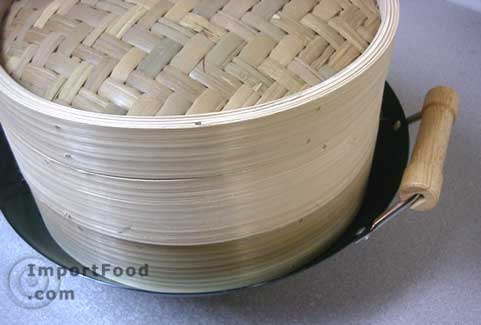
Today, we feature a recipe for a steamed almong cake, which is a popular way of making a cake in Malaysia. People use a large bamboo steamer or a large vegetable metal steamer over simmering water. The steamer should be large enough to hold the baking pan.

Steamed Almond Cake Recipe


Metal Steamer


Bamboo Steamer


Ingredients:

2 cups flour
0.5 tsp. baking powder
6 eggs
1.5 cups castor sugar
3 tbs. almonds (cut into strips)

Method:

1) Put flour in a bowl and steam for 10 mins. Remove and spread on a piece of paper to cool.

2) Mix baking powder with flour and sift twice.

3) Beat eggs for 30 mins, adding sugar gradually.

4) Fold in flour and mix well.

5) Grease and line a round baking tin with greaseproof paper, cut larger than the bottom of tin.

6) Pour mixture into the tin and steam covered for 10 mins. Remove cover and sprinkle top with almonds. Cover again and steam for another 10-20mins.

7) Remove cake from tin. Cut into neat slices and serve hot or cold.

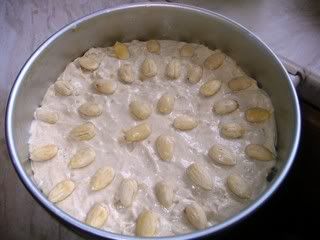
Almond Cake Batter


Steamed Almond Cake

Labels: , ,

Special Ramadan Series

Dear Reader, Assalaamu’alaikum.

Ramadan Mubarak. We wish you a blessed and productive Ramadan! Make no mistake about it - keeping the fast and increasing our acts of worship during this blessed month is not an easy task. The physical demands of balancing work or school with fasting all day, feeling fatigued and less effective than you normally are, waking up for Suhoor, praying Teraweeh and Tahajjud prayers, dealing with sleep deficits.

But the last thing we would want is to let Ramadan pass us by without doing all that we aim and desire to. Do not allow yourself to feel guilty or regretful when Ramadan passes.

The Ramadan Series will send you emails with practical tips on how to gain and maintain the physical and spiritual energy necessary to embark on increased religious oligations so that you will reap the benefits from this blessed month. This includes special Ramadan duas to say during the month. Do sign-up today!

* Email
First Name
Last Name
* = Required Field

Article Link

Share

Thursday, September 25, 2008

Ramadan Iftar Recipes | Tasty Food From Saudi Arabia

Saudia Arabia is the birthplace of Prophet Muhammad. The King of Saudi Arabia acts as the Custodian of the Two Holy Mosques. As such, Saudi Arabia tries to fulfill its responsibility of defending Islam and striving to serve Muslim interests. It also has been conducting dialogues with other cultures and religions with the aim of driving deep the principles of peace, justice and universal human welfare.

In Ramadan, adult Muslims, except the sick and those traveling, abstain from food, drink, smoking and sex between dawn and sunset. After breaking their fast, Muslims attend Tarawih, a special nightly prayers. Muslims are also encouraged to read the Quran and engage in spiritual remembrances.

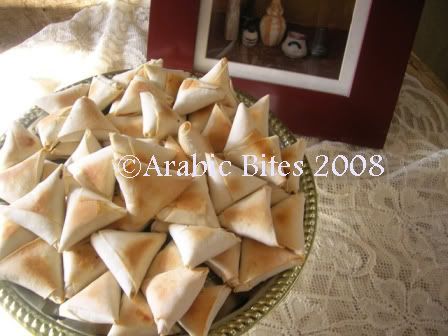
Today, we feature a Ramadan iftar dessert recipe from Saudi Arabia called Sambosa Helwa (Mini Sweet Sambosa). It is somewhat similar to the savoury Indian samosas that is filled with meat or vegetables, but in the Saudi Arabian version it is sweet. There is also a Saudi Arabian savoury version that is deep-fried.


Sambosa Helwa (Mini Sweet Sambosa) Recipe


Recipe By Arabic Bites.


Ingredients:

1 package mini sambosa pastry leaves.

For the filling:
1 cup of finely chopped pistachios.
1/2 cup sugar.
1/2 teaspoon ground cardamom.
2 to 4 tablespoons rose water.
1/8 teaspoon blossom water.
Pinch of saffron threads (crushed).

Method:

1) To seal the dough, mix 2 tablespoon of flour with water to make a sticky paste.

2) Mix all of the filling ingredients.

3) Place the pastry in your hand, take the left edge and fold it to the right side, next fold it to the left side to get a cone shape.

4) Fill cone with half a teaspoon of filling, seal the cone by repeating the same moves (left and right) close the edge with the sealing dough.

5) Bake at 350 F until golden brown.

Labels: , ,

Special Ramadan Series

Dear Reader, Assalaamu’alaikum.

Ramadan Mubarak. We wish you a blessed and productive Ramadan! Make no mistake about it - keeping the fast and increasing our acts of worship during this blessed month is not an easy task. The physical demands of balancing work or school with fasting all day, feeling fatigued and less effective than you normally are, waking up for Suhoor, praying Teraweeh and Tahajjud prayers, dealing with sleep deficits.

But the last thing we would want is to let Ramadan pass us by without doing all that we aim and desire to. Do not allow yourself to feel guilty or regretful when Ramadan passes.

The Ramadan Series will send you emails with practical tips on how to gain and maintain the physical and spiritual energy necessary to embark on increased religious oligations so that you will reap the benefits from this blessed month. This includes special Ramadan duas to say during the month. Do sign-up today!

* Email
First Name
Last Name
* = Required Field

Article Link

Share

Tuesday, September 23, 2008

Ramadan Iftar Recipes | Tasty Food From India

Haleem Recipe

In India, as in most Muslim communities, iftar during Ramadan is often done as a community, with Muslims gathering to break their fast together. Traditionally, a date is the first thing to be consumed during Iftar when the fast is broken. This is in keeping with the Prophet's Sunnah (that is, the way of the prophet).

One of the more popular iftar dishes in India is the haleem, a type of thick stew made from pounded wheat and mutton (or beef). The Haleem is said to have originated from Hydrebad in South India. The main ingredients include mutton, cracked wheat, lentils, ginger & garlic paste, turmeric and spices. It is served hot with ghee based gravy put on top, lime pieces, coriander and fried onions as garnish. It is somewhat similar to the Moroccan harira that was featured here recently, but the haleem has a lot more spices.

The haleem is traditionally slow cooked for at least 10 hours in a cauldron and two men, usually, hit with large wooden sticks all through out the preparation, until it gets to a sticky-smooth consistency, similar to mashed mince. The cooking of haleem in Hyderabad is mastered to an art form.

But here is a haleem recipe that you can do right in your own kitchen, in 2 hours, without need for cauldrons or beefy men. Phew!

Haleem Recipe


Ingredients:


2 lbs Boneless pieces of Lamb
3 cups Cracked wheat
4tbsp Ginger-Garlic paste
1 cup Mixed lentils [urad daal,chana daal]
1tbsp Red Chilli powder
1/2 tsp Turmeric powder
1 n 1/2 cup Yougurt
1 cup Golden n Crisp fried onions [ the readymade brands available in the market can be used,if you want to save time]
1/2 cup Cashew nuts
1 tsp Garam Masala powder[1 tsp shahi zeera,2-3 cardamom,2-3 cloves and 1" cinnamon stick...blend into a fine powder]
1/2 tsp Black Pepper corns
Whole spices- 1" cinnamon stick, 2-3 cloves,2-3 cardamom
1/2 cup Ghee
Fresh Herbs- 1 cup fresh coriander, 1/4 cup fresh mint and 5-6 green chillies
Salt to taste
1/2 cup oil.

Method:

1) First wash and soak the cracked wheat for atleast 1/2 hour.Then wash and clean the lamb thoroughly,trimming off any excess fat.

2) Mix the lamb with 1 tbsp of Ginger-Garlic paste, 1/ tsp of salt, red chilli powder,1/2 tsp garam masala powder and 1/4 tsp tumeric.

3) Pressure cook the lamb on high for 8-10 min and then simmer for another 15-20 min. After it cools down, shred the meat and keep aside.

4) Boil the cracked wheat along with the mixed lentils,1tbsp ginger-garlic paste, 1/ tsp turmeric powder, 3-4 green chillies, 1/2 tsp black pepper corns in 8-10 cups
of water until its cooked completely and the water is almost absorbed by the wheat.

5) Put this wheat in a blender and pulse for a few seconds. Remove and keep aside.

6) Heat the oil in another container, add the whole spices, the cooked shredded lamb, remaining green chillies, 1/2 cup fresh coriander and saute for a 2-3 min.

7) Add the yoghurt and saute for another 10- 15 min.

8) Add 3 cups of water and bring it to a boil.

9) Add the cooked wheat and mix well, add a little bit of ghee at a time. Add salt if needed.

10) Simmer for at least 1/2 hour, stir regularly.

Motes: You can substitute the ghee with butter, or use olive oil (as a healthier option).

Labels: , ,

Special Ramadan Series

Dear Reader, Assalaamu’alaikum.

Ramadan Mubarak. We wish you a blessed and productive Ramadan! Make no mistake about it - keeping the fast and increasing our acts of worship during this blessed month is not an easy task. The physical demands of balancing work or school with fasting all day, feeling fatigued and less effective than you normally are, waking up for Suhoor, praying Teraweeh and Tahajjud prayers, dealing with sleep deficits.

But the last thing we would want is to let Ramadan pass us by without doing all that we aim and desire to. Do not allow yourself to feel guilty or regretful when Ramadan passes.

The Ramadan Series will send you emails with practical tips on how to gain and maintain the physical and spiritual energy necessary to embark on increased religious oligations so that you will reap the benefits from this blessed month. This includes special Ramadan duas to say during the month. Do sign-up today!

* Email
First Name
Last Name
* = Required Field

Article Link

Share

Sunday, September 14, 2008

Ramadan Rice Porridge Recipe


In Singapore, most mosques cook and distribute rice porridge during the month of Ramadan. This porridge is given out to Muslims after Asr' (mid-afternoon) prayers. Typically, Muslims who can afford it, give money to the mosque committtee so that they can sponspor the porridge distribution.

Most Muslim families break their fast by eating the porridge first.


Rice Porridge


Rice Porridge Recipe

Ingredients :

200g Uncooked Rice
2.5L Water
150g Lean Meat(beef and chicken), Minced
4cm Cinnamon
1 Whole Star Anise
4 Cloves Garlic
3cm Fresh Ginger
10 Pieces Blackpeppercorns
10ml Coconut Milk (optional)
1 carrot, Minced
4 tbsp Deep-fried Shallots
4 tbsp Spring onions, Chopped Moderately
Salt to Taste

Method :

1)Wash rice in several changes of water, drain and put in a large pan, add water and bring to a boil.

2)Add cinnamon, star anise, garlic, ginger and the meat.

3)Partially cover with a lid and simmer gently, stirring constantly for about 1 hour or until rice is very soft and creamy. If the porridge appears to dry out, add a little hot water.

4)When rice is soft, remove cinnamon, star anise and ginger, then add chicken and simmer for another 15 minutes.

5)Add the coconut milk here if desired (optional) and season to taste with salt.

6)Serve hot, garnished with fried shallots and spring onions.

If you prefer a vegetarian rice porridge, then simply leave out the meat, and add baby corn, peas and other vegetables you would prefer.

Labels: , ,

Special Ramadan Series

Dear Reader, Assalaamu’alaikum.

Ramadan Mubarak. We wish you a blessed and productive Ramadan! Make no mistake about it - keeping the fast and increasing our acts of worship during this blessed month is not an easy task. The physical demands of balancing work or school with fasting all day, feeling fatigued and less effective than you normally are, waking up for Suhoor, praying Teraweeh and Tahajjud prayers, dealing with sleep deficits.

But the last thing we would want is to let Ramadan pass us by without doing all that we aim and desire to. Do not allow yourself to feel guilty or regretful when Ramadan passes.

The Ramadan Series will send you emails with practical tips on how to gain and maintain the physical and spiritual energy necessary to embark on increased religious oligations so that you will reap the benefits from this blessed month. This includes special Ramadan duas to say during the month. Do sign-up today!

* Email
First Name
Last Name
* = Required Field

Article Link

Share

Saturday, September 6, 2008

Ramadan 2008 Day 6 - What I had for Iftar

Ramadan Iftar Pictures: What Are We All Eating?

I thought it would be a good idea to post pictures of what we are having for Iftar.

This picture below is from a family in Singapore. They had light chicken rolls and sandwiches for Iftar on Saturday (Day 6 of Ramadan 2008). According to them, they prefer to have something simple and light, so that it is easily digested.


This picture below is from Jordan featuring a popular fried food from the Middle East called Qatayyif, which is dough stuffed with cheese, and topped with a hot simple syrup.


The recipe for making Qatayyif is simple - usually store-bought flat pancakes are bought, then cheese, or other fillings are placed into the center of the pancakes. Then they are folded over and deep fried. The fried Qatayyif is served with hot sweet syrup.

Please email us at ramadanblog[at]gmail.com to send us your iftar pictures, ramadan recipes, articles or Ramadan reflections.

We will welcome your contributions!

Labels: , ,

Special Ramadan Series

Dear Reader, Assalaamu’alaikum.

Ramadan Mubarak. We wish you a blessed and productive Ramadan! Make no mistake about it - keeping the fast and increasing our acts of worship during this blessed month is not an easy task. The physical demands of balancing work or school with fasting all day, feeling fatigued and less effective than you normally are, waking up for Suhoor, praying Teraweeh and Tahajjud prayers, dealing with sleep deficits.

But the last thing we would want is to let Ramadan pass us by without doing all that we aim and desire to. Do not allow yourself to feel guilty or regretful when Ramadan passes.

The Ramadan Series will send you emails with practical tips on how to gain and maintain the physical and spiritual energy necessary to embark on increased religious oligations so that you will reap the benefits from this blessed month. This includes special Ramadan duas to say during the month. Do sign-up today!

* Email
First Name
Last Name
* = Required Field

Article Link

Share

Related Posts with Thumbnails